Connect Balls - Line Puzzle -
- 4.6
- Rating
- 10.00M
- Installs
- Free
- Price

 Analysis by App-foxy
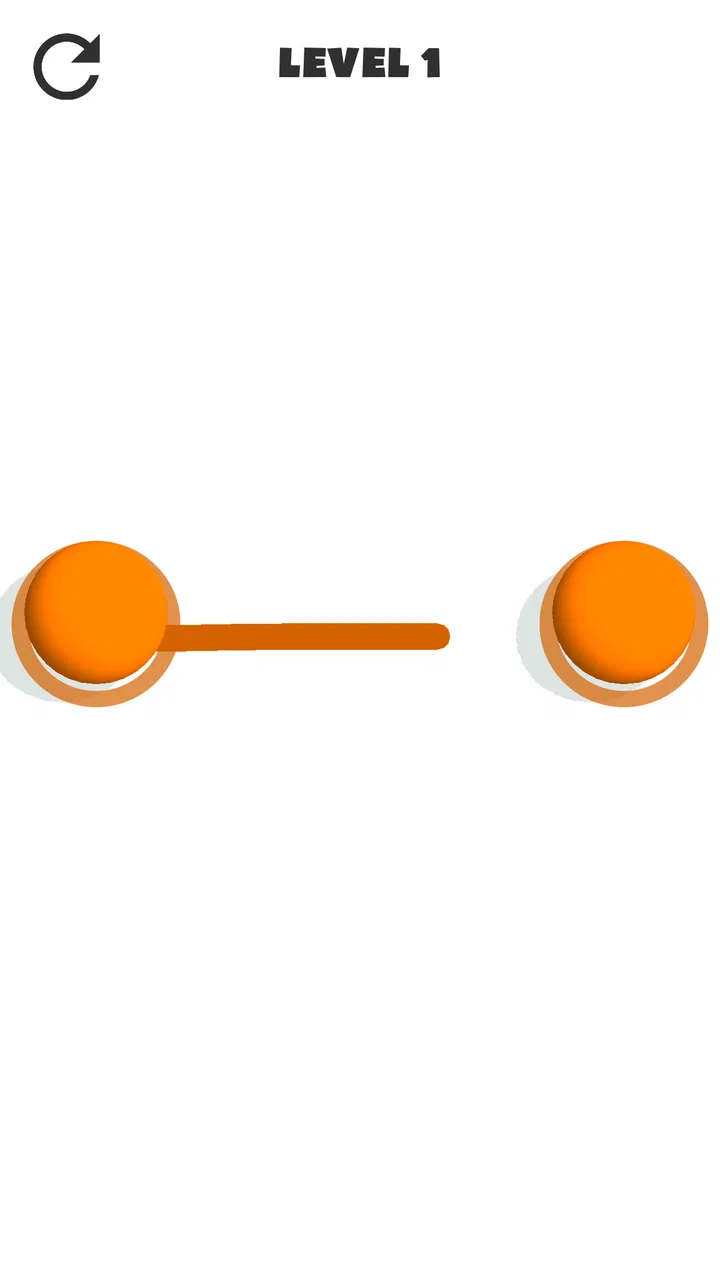
I usually approach mobile puzzle games with one question: do they stay interesting after the first few minutes, or do they become something I open once and forget? Connect Balls - Line Puzzle makes a good case for the former. Its central idea is easy to understand: matching balls need to be connected with a line, but the simple rule becomes a small spatial planning exercise once the board starts demanding careful routes. I found it most enjoyable when I treated each level as a problem to read rather than a reflex challenge.
That simplicity is the game’s clearest strength. There is no need to learn a complicated control system before playing, and the short puzzle format suits the moments when I want something focused without committing to a long session. It is a free puzzle game from BAF, Ltd., rated for Everyone, and it has attracted a broad audience with an average rating of 4.6 from around 369 thousand ratings. Those figures fit my impression: this is designed to be approachable first, challenging second.
Why the line-connecting idea works so well
The appeal comes from the tension between recognition and restraint. I can often spot which balls belong together immediately, but seeing the matching colors is only the beginning. The real question is how to draw the route without creating a problem for the remaining pairs. A careless connection may look correct on its own and still make the rest of the board awkward or impossible to finish cleanly.
You May Also Like

 Blood Strike: 2.5 Anniversary
Blood Strike’s Loadouts Turn Every Drop Into a Tactical Gamble
A close look at Blood Strike’s custom loadouts: how fast access to signature weapons reshapes its battle royale rhythm, rewards preparation, and narrows the gap between fights.

 Pandora - Music & Podcasts
Pandora’s Music Is Easy to Start, but Harder to Recover
Pandora’s strength is its low-effort path from a seed to a station. Its weak spot is how much confidence it asks you to place in connection, setup, and quiet recovery.

 8 Ball Pool
 Is Built on Rivalries, Rematches, and Routine
A close look at the rivalries, rematches, shared routines, and unanswered safety questions that turn a quick pool match into a persistent mobile community.

 Samsung Music
’s Quiet Strength Is Playing What You Already Own
Its reach comes less from spectacle than from dependable access to a personal library. That simplicity is both the app’s strongest retention engine and its ceiling.

 AccuWeather: Weather Radar
AccuWeather Review: A Quick, Clear Forecast for Everyday Decisions
For everyday plans, the best forecast is the one you can understand quickly. AccuWeather makes rain timing, radar, and local conditions easy to act on, with a few trade-offs.

 Hill Climb Racing
Why Hill Climb Racing Still Turns Crashes Into One More Run
A tiny car, a bumpy hill and one more upgrade: Hill Climb Racing keeps resurfacing because its simple chaos makes every near-miss feel personal.
More From Our News Desk



That makes each move feel more deliberate than the store summary suggests. I am not simply tracing pairs as quickly as possible. I am checking the available space, estimating which route should be handled first, and trying not to close off a useful passage. The best moments arrive when a board appears crowded at first, then opens up after I recognize the right order of connections.
I also like that the basic rule is readable without a tutorial-heavy introduction. Someone unfamiliar with this style of puzzle can understand the objective almost immediately. That matters on a phone, where a game has to explain itself quickly. The accessible design is also why I can imagine handing it to a child or a casual player without needing to guide every step.
At the same time, the game is not only for beginners. Its challenge comes from visual organization rather than obscure rules. I have to pay attention to the whole board, not just the pair directly under my finger. This creates a gentle learning curve: early puzzles teach the relationship between matching balls and available paths, while later situations reward planning and patience.
Small decisions matter more than fast fingers
My most useful habit was to pause before drawing anything. I first looked for pairs located near edges or in narrow spaces, then considered whether their routes would interfere with the center of the board. This is a simple technique, but it prevents the common mistake of connecting the easiest-looking pair and discovering that the remaining paths no longer fit.
Another helpful approach is to identify “blocking” pairs. Some balls sit in positions where a connection across the board could divide the available space. I found that solving these pairs early often gives the rest of the puzzle a clearer shape. This is not a special mode or a hidden mechanic; it is simply the kind of board-reading that makes the game more satisfying than random tapping.
When I made a poor choice, I tried not to restart immediately. Leaving the board visible for a moment often showed me why the route failed. That turned mistakes into useful information. For players who enjoy improving their own process, this is one of the game’s strongest qualities: the challenge is understandable, so a failed attempt usually feels like a planning error rather than bad luck.
The touch interaction is naturally suited to the concept. Drawing a line directly between matching balls feels more immediate than selecting options from menus. It also makes the game easy to play with one hand during a short break. The trade-off is that precision matters. On a small screen, a hurried gesture can produce an unintended route, especially when several balls and paths are close together.
Where it fits into everyday play
I would use this game in situations where I want a quiet mental reset rather than a dramatic gaming session. For example, during a short wait, I can play a few puzzles, stop without losing the thread of a story, and return later. It works particularly well when I am tired of scrolling but do not have enough time for a larger game.
It is also a reasonable choice for family play because the objective is visible and the age rating is Everyone. A parent and child could look at the same board and discuss which pair should be connected first. That kind of shared solving is more natural here than in a game built around speed, combat, or complicated progression systems.
However, I would not choose it for someone who needs constant novelty or a strong narrative reason to continue. The pleasure is concentrated in solving the boards themselves. Players who prefer character development, competitive matches, elaborate worlds, or a steady stream of dramatic rewards may find the experience too quiet.
The game has passed the ten-million-install mark, which suggests that its straightforward format has wide appeal. Still, popularity does not change the core expectation: this is a focused puzzle experience, not an all-purpose mobile game. I would recommend it to someone who enjoys visual logic and short sessions, but I would steer a story-driven player toward a different category.
What makes it different from familiar puzzle alternatives
Compared with match-three games, this feels less dependent on rapid reactions or lucky combinations. I am responsible for constructing complete routes, so the satisfaction comes from seeing a plan work across the entire board. A match-three game is often about recognizing immediate opportunities; this one asks me to consider consequences several moves ahead.
It also differs from number-based puzzles. In a typical number grid, the information is abstract and rule-driven. Here, the spatial layout is the main language. I can understand the problem at a glance, but solving it requires visual discipline. That makes it a better fit for players who enjoy arranging shapes and paths than for people who prefer calculations or wordplay.
Compared with drawing games that reward speed, Connect Balls is more thoughtful. There is little reason to rush when the board itself is asking for a complete solution. I enjoyed that slower pace, although players looking for pressure may see it as a weakness. The game’s identity depends on calm concentration, and it does not try to disguise that.
The line-based format also gives it a useful middle ground between casual and serious puzzles. I can begin without preparation, yet I still have something to think about once the obvious connections are gone. That balance is the main reason I would recommend it over a purely repetitive tap-to-clear game when the goal is to exercise attention for a few minutes.
The friction I noticed while playing
The biggest limitation is repetition. Once I understood the core pattern, the experience depended heavily on how much variation each board offered. The basic action remains the same throughout: connect matching balls with lines. That consistency is welcoming, but it can also make longer sessions feel less fresh than the first few rounds.
For me, the game works best in small portions. I would not sit down expecting an entire evening of deep puzzle variety. After several boards, I may want to take a break because the visual process starts to feel familiar. This is not a flaw in the central idea, but it is an important expectation to set before downloading it.
The free entry point is convenient, and the game is listed as free to play. Optional in-app purchases are priced at $3.99 per item. I would approach those purchases thoughtfully rather than assuming they are necessary. The value depends on how much I play and whether I want to spend money on convenience or additional content. For a casual user, trying the free experience first makes the most sense.
Another point to consider is the balance between accessibility and depth. Because the rules are so easy to grasp, experienced puzzle players may want more demanding variations than the central format provides. If I am looking for layered systems, unusual constraints, or a campaign with a strong sense of progression, a more specialized puzzle title may hold my attention longer.
There is also a practical control issue. The line-drawing gesture is intuitive, but it is not immune to accidental input. I found that slowing down near crowded areas helped. Anyone with a smaller phone or less precise touch control should expect to make an occasional connection that does not match the intended path. That is manageable, but it means the game rewards careful handling as well as careful thinking.
Who should download it
I think it is a strong choice for casual puzzle players who want a clean objective, short sessions, and a challenge based on planning. It is especially suitable for someone who enjoys looking at a board and gradually discovering the correct order of actions. The Everyone rating also makes it easier to recommend across age groups, provided the player is comfortable with the touch controls.
It can be useful for a person who wants a low-pressure alternative to endless scrolling. A short session gives the mind a defined task: inspect the layout, connect the pairs, learn from mistakes, and move on. I would not describe it as a formal brain-training tool, but it does encourage visual attention and forward planning in a way that feels more engaging than passive entertainment.
I would be more cautious about recommending it to competitive players. There is no reason in the basic concept to expect the intensity of a versus puzzle game, and the appeal is not built around defeating another person. Likewise, someone who dislikes repeating a single interaction should probably choose a puzzle game with several distinct mechanics instead.
Device compatibility is fairly broad: the current version is 1.34.0 and requires Android 7.0 or later. That makes it accessible to many older Android devices, although actual comfort will still depend on screen size and touch responsiveness. I would check that the phone feels comfortable for tracing routes before deciding whether it is a game I want to play for longer sessions.
My verdict after weighing the strengths and weaknesses
The best reason to play it is the clarity of its challenge. I always know what I am trying to do, yet the correct solution is not always obvious. That combination gives the game a satisfying rhythm: understand the board, make a plan, test the route, and adjust when necessary. It is simple enough for a first-time player and thoughtful enough to reward someone who studies the layout.
My recommendation comes with a clear condition: treat it as a compact puzzle companion, not as an endlessly changing adventure. In short sessions, its focus is a strength. In long sessions, the repeated line-connecting structure may become predictable. Players who accept that trade-off will get a calm, approachable game that is easy to pick up whenever they have a few spare minutes.
BAF, Ltd. has built the experience around an idea that needs very little explanation, and that restraint works in its favor. The free price makes trying it straightforward, while the broad audience response and more than ten million installs show that the format has connected with many players. I would still avoid spending on optional items until I knew the core puzzles fit my habits.
Overall, I would recommend Connect Balls - Line Puzzle to anyone who likes visual logic, careful routes, and games that respect short attention windows. I would skip it in favor of a richer alternative if I wanted a story, competitive pressure, or a wide range of puzzle mechanics. For the right player, though, its modest premise is exactly what makes it work: a small board, a few matching balls, and just enough space to make every connection matter.
FAQs for Connect Balls - Line Puzzle -
01What is Connect Balls - Line Puzzle and how does it work?
Connect Balls - Line Puzzle is a challenging and engaging puzzle game that involves connecting balls of the same color without overlapping lines. Players must strategically plan their moves to complete each level. The game is designed to test problem-solving skills and offers numerous levels with increasing difficulty.
02Does Connect Balls - Line Puzzle offer in-app purchases?
Yes, Connect Balls - Line Puzzle offers in-app purchases. Players can buy hints or additional levels to enhance their gameplay experience. While the game is free to download, these optional purchases can help players progress faster or overcome particularly challenging levels.
03Is Connect Balls - Line Puzzle suitable for all ages?
Connect Balls - Line Puzzle is designed to be family-friendly and suitable for all ages. Its simple yet challenging gameplay makes it accessible for children and adults alike. However, younger children might need assistance with some of the more complex levels as the difficulty increases.
04Can Connect Balls - Line Puzzle be played offline?
Yes, Connect Balls - Line Puzzle can be played offline. Once the game is downloaded, players do not need an internet connection to enjoy the puzzles. This feature makes it convenient for users who want to play on the go without relying on Wi-Fi or mobile data.
05What are the system requirements for Connect Balls - Line Puzzle?
Connect Balls - Line Puzzle is compatible with both Android and iOS devices. To ensure smooth gameplay, users should have a device running Android 4.4 or later, or iOS 9.0 or later. Adequate storage space is also necessary to accommodate the game's data and any updates.
Pros
- Addictive gameplay keeps users engaged.
- Simple
- intuitive controls enhance usability.
- Visually appealing graphics and design.
- Offline mode available for on-the-go play.
- Suitable for all ages
- family-friendly fun.
Cons
- Limited levels may feel repetitive.
- In-app ads can disrupt gaming flow.
- No multiplayer or competition mode.
- Requires frequent updates for new content.
- Battery consumption is slightly high.

Connect Balls - Line Puzzle -
Gallery